An experimental ecosystem for learning and unlearning...
Dularia means created through love in the Santhal tribal language. Dularia was founded by Dr. Sharmishtha Dattagupta, who holds a PhD in Biology, is trained in permaculture, and is an internationally recognised leadership coach and facilitator. She brings all her expertise and qualities, including insights from decades of meditation practice, into Dularia, her work of love in the world.
Since childhood, Sharmishtha has found refuge in nature. She has been deeply disturbed by the way humans have destroyed ecosystems, as well as created societies where gross inequalities exist. Following her calling to make a difference, she left her successful academic career as a Geobiology professor at a leading University in Germany, and spent several years volunteering with children and adults of the Santhal tribal community. She observed their immense capacity to work in collaboration with nature, and at the same time, understood how they have been marginalized and made to believe that their wisdom doesn’t matter.
In 2018, she founded Dularia as an experimental practice space for deep collaboration with nature and community, where dignity, inclusivity, care and celebration are at the heart of its choices. We give selected members of the local Santhal, Konra and Bengali communities an opportunity to lead, teach, learn new skills, and take ownership of the project, while making a dignified livelihood. Our overall vision is to be a thriving, community-led, financially self-sustained, regenerative organisation that supports the preservation of music, art, and craft traditions and fosters the fulfillment of human potential.

The People of Dularia


Our Process
We started by regenerating the land in 2018...
we transformed what was once dead soil impacted by over 20 years of conventional rice farming using urea and pesticides into a thriving primary forest using regenerative permaculture techniques
...then we built our Earthhome...
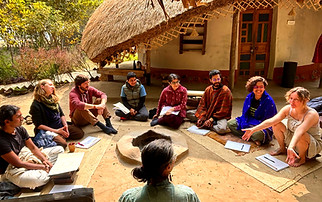
using upcycled cement bags filled with mud from our plot, we built our cozy and gorgeous earthhome using the earthbag technique using zero cement. The roof was made in the traditional vernacular style with wood and straw thatch.
...and our glass-bottle kitchen and cafe...
with the wattle-and-daub technique using mud and bamboo, and upcycled glass bottles, we built our stunning kitchen which has a lovely play of light .

We started planting our food forest, veggie patch and organic rice...
using zero chemical fertilisers or pesticides, we have started growing and selling organic Gobindobhog rice, a traditional variety of Bengal. We're also planting a food forest with a large diversity of fruit trees including hardy native varieties that arrived on their own. We also grow seasonal vegetables and a large variety of greens!

and started offering our learning programs on natural living
fulfilling our objective of being a center for deep, transformative learning and unlearning